Event 1
Claude Daigle's drowning
[Claude Daigle's drowning](entity:event-recall-event-10812a4ff406) begins as a breaking-news announcement about an accidental death at a [Fern Grammar School](entity:location-recall-location-fern-grammar-school-a9e9f6769fec) outing, but the details that accumulate afterward overturn that account. Claude's missing penmanship medal, the children's encounters at the old wharf, and [Rhoda Howe Penmark](entity:character-recall-character-rhoda-howe-penmark-3a5637280060)'s eventual admission establish that the drowning followed her attempt to take the prize. The event becomes the turning point in [Christine Penmark](entity:character-recall-character-christine-penmark-739af564464e)'s understanding of her daughter: an apparent tragedy exposes a deliberate killing and leaves Christine facing a choice between protecting Rhoda and acknowledging the harm done.
## The Outing and the First Report
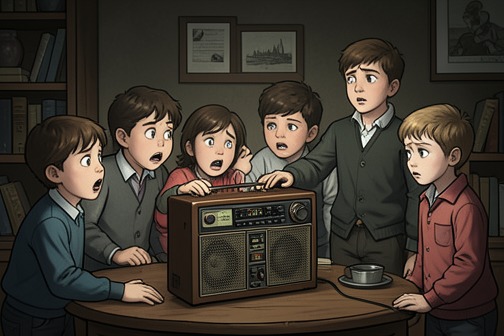
At three o'clock, while [Monica Breedlove](entity:character-recall-character-monica-breedlove-b326f340ce2b) and Christine Penmark were at home, a radio bulletin announced that a child from the annual Fern Grammar School outing had drowned in the bay. The victim's name was withheld until the parents could be notified. Monica immediately rejected the possibility that the child was Rhoda, reasoning that Rhoda was too self-reliant to fit her idea of a child likely to suffer such an accident. Her confidence rested on Rhoda's composed manner, but that very composure would soon become part of Christine's unease.
The later bulletin named [Claude Daigle](entity:character-recall-character-claude-daigle-f028f68e0de2), the only child of [Dwight Daigle](entity:character-recall-character-dwight-daigle-0484cad4f5f6) and [Hortense Daigle](entity:character-recall-character-hortense-daigle-05f9455b9edc). His body had been found among the pilings at an old wharf on Fern property, a place the children had explicitly been told to avoid. He had been marked missing at the routine lunchtime check; a guard found him and brought him ashore. The broadcast treated the bruises on his forehead and hands as likely consequences of his body striking the pilings. At this stage, listeners received the death as an accident with a few unexplained details, not as an attack.
The news also established a possible reason for the mystery surrounding Claude's final hours: only days earlier, he had received a gold penmanship medal at the Fern School closing exercises. He had been wearing it when last seen, but it was gone when his body was discovered. A search of the bottom near the wharf did not locate it. The missing award was initially reported as a small unresolved fact within the tragedy; later, it connected the death to Rhoda's fixation on the prize.
## From Suspicion to a Reconstructed Encounter
When Rhoda returned, Christine tried to prepare her for the distress of having seen a child die. Rhoda said she knew what had happened and had been present when the body was brought from the water and laid on the lawn. She had even suggested that the guards search among the pilings. Rather than expressing grief or fear, she described the discovery and efforts to revive Claude as interesting. Christine had previously understood this coolness as a familiar family trait, called between her and her husband the Rhoda reaction; now it deepened her concern.
Accounts from the school later supplied the sequence behind the broadcast. On the bus, Rhoda repeatedly pressed Claude to let her hold his medal. When he refused, she continued to pursue the request until [Claudia Fern](entity:character-recall-character-claudia-fern-cc8f564b3784) moved Rhoda to a seat near the driver, away from him. Claudia Fern later spoke to Rhoda about courtesy and fair play. Less than an hour afterward, an older pupil serving as a monitor saw Rhoda block Claude's path, shove him, and reach for the medal. Claude broke away and ran toward the old wharf; Rhoda followed at a walking pace.
Around noon, a guard saw a girl in a red dress coming off the wharf and called out a warning. He did not know the children's names and could not identify the girl positively, but Rhoda was the only girl wearing a dress that day. At one o'clock Claude was found missing at roll call. In retrospect, the sightings joined the struggle over the medal to the place where Claude was found. At the time, each detail had been treated as incomplete or circumstantial, allowing the first account of an accident to stand.
## The Medal and Rhoda's Admission
The missing medal became tangible evidence when Christine went to find Rhoda's locket in a tin in her dresser drawer. Beneath the oilcloth covering the drawer, she found the penmanship medal. Its presence in Rhoda's room contradicted the story Christine had heard about the award and made the earlier broadcast's unresolved loss newly significant. Christine put the medal back, recognizing that Rhoda had concealed it rather than simply found herself near the scene of an accident.
When Christine confronted her daughter, Rhoda first resisted and then calmly admitted that she had hit Claude with a shoe. She justified the attack by saying she had wanted the medal and that Claude had refused to give it to her. She further explained that, after he fell into the water, he tried to hold on to the wharf and threatened to tell on her. Rhoda said she struck his hands so that he would let go, and described the blood on her shoe as resulting from the blows. She continued to blame Claude, treating his refusal and threat as reasons that made her own actions his fault.
The confession clarified the bruises and the drowning without turning the radio bulletin into a reliable account of what had occurred: the broadcast had named the death accidental and attributed the marks to the pilings, while Rhoda's account revealed her role in causing Claude to lose his hold. It also exposed the medal not as a detached keepsake but as the object around which the confrontation began and as a clue Rhoda had hidden.
## Christine's Dilemma and the Event's Consequences
The discovery and confession change the meaning of Christine's earlier efforts to comfort Rhoda. She had urged her daughter to put the distressing images out of her mind, while Rhoda insisted she had not been disturbed by what she saw. Once Rhoda admitted what she had done, Christine could no longer treat her calmness as simple insensitivity to an accident. Rhoda's statements placed the desire for the medal and the wish to prevent a report above concern for Claude's safety, while her repeated blame of Claude showed how she explained the harm to herself.
Christine considered whether Rhoda was insane and might need treatment, but concluded that she did not believe her daughter was insane. She also imagined going to the police and recognized that the authorities might remove Rhoda to an institution, although she did not know what procedures would follow. The question was therefore not an established legal outcome but Christine's unresolved choice: how to protect a child she loved while confronting what that child had done and the possibility of further harm. In a letter she did not intend to send to Kenneth, she framed the problem as a duty both to Rhoda and to the society in which they lived.
The episode's revelations also unsettle the reassuring signs Christine had relied on: Rhoda's school routines, her Sunday-school study, and her fluency in the language of ordinary childhood cannot establish that she understands or shares the moral concern those forms imply. The drowning converts the missing medal from a reported puzzle into a trail of evidence, and the first announcement's mistaken appearance of accident into a crisis of knowledge and responsibility. For Christine, the decisive change is not only that she learns what happened to Claude, but that she must decide what acknowledging the truth will require of her.
Event 2
Death of Clara Post
The [Death of Clara Post](entity:event-recall-event-9020950c2d76) is a remembered, unexplained fatal fall that becomes one of the first warning signs in [Christine Penmark](entity:character-recall-character-christine-penmark-739af564464e)’s growing suspicion of [Rhoda Penmark](entity:character-recall-character-rhoda-penmark-27e34b7929e6). When Rhoda is seven, Clara falls down the back stairs of her [Baltimore](entity:location-recall-location-fffe9b5e5046) apartment building while alone with the child. Rhoda offers a plausible account involving a kitten, but [Edna Post](entity:character-recall-character-edna-post-df8792b7c821)’s response and Rhoda’s immediate claim to Clara’s promised pendant leave the accident unsettled. Christine later recalls not only the death, but also the family’s exclusion from the funeral and Rhoda’s attachment to the opal ornament.
## Context and the promised pendant
[Clara Post](entity:character-recall-character-clara-post-4335315b558e) is an elderly woman living in the same Baltimore apartment building as the Penmarks. In her middle eighties, and described as somewhat childish, she is a widow’s mother and becomes particularly fond of Rhoda, who often visits after school. Christine notices the contrast between Clara’s admiration and the dislike Rhoda seems to inspire in children her own age, a difference that gains significance in retrospect but does not, by itself, explain Clara’s death.
Among Clara’s possessions, the child most admires a crystal ball filled with transparent liquid and floating opal fragments. As it moves, the stones make shifting patterns; a small gold ring at its top holds a black ribbon so Clara can wear it as a pendant. Clara says she enjoys looking into the changing opals when she cannot sleep. The object is therefore both a valued personal possession and a point of intimacy between the old woman and the child.
Clara tells Rhoda that the pendant will be hers after Clara dies and asks Edna to confirm that she heard the promise. Edna does so. This exchange establishes an explicit expectation before the fatal afternoon: Rhoda knows the object is intended for her, while Edna has witnessed Clara’s assurance. That prior promise later gives Rhoda a ready explanation for claiming the pendant, even as the timing and manner of her claim disturb Christine.
## The fall and Rhoda’s account
One afternoon, while Edna is shopping at a supermarket, Clara and Rhoda are alone. Clara falls down the spiral back stairs, breaks her neck, and lands in the small cement courtyard below, five flights down. When Edna returns, Rhoda meets her at the door and explains that Clara heard a kitten mewing on the back-stair landing. According to Rhoda, Clara insisted on going outside to look for it, followed by the child; Clara then misjudged a step and fell. Rhoda points out where the body lies, and Christine arrives among the neighbors in time to hear her daughter repeat this account.
Rhoda’s story supplies a coherent sequence for an accidental fall, but Edna immediately challenges its central detail. She says that Clara hated cats and had been afraid of them all her life; even many kittens crying nearby would not have drawn her toward them. Rhoda responds with apparent surprise and insists that Clara did go out to look. Asked where the kitten is, she says it ran away down the stairs and describes it as gray with white feet. The account thus contains a specific explanation and a specific animal, but the person best placed to judge Clara’s behavior rejects the premise that would have brought her onto the stairs.
The discrepancy raises suspicion without resolving what happened. The account establishes Clara’s fatal fall and preserves Rhoda’s explanation alongside Edna’s contradiction; it does not supply an independent witness to the fall or establish precisely how Clara came to be on the stairs. Christine’s later recollection gives those competing details their accumulating weight, rather than converting uncertainty into direct proof.
## The claim and the aftermath
Immediately after Edna challenges the account, Rhoda suddenly takes hold of her sleeve and asks whether the opal ball is hers now, because Clara had promised it to her when she died. Christine rebukes her for saying this at such a moment. Rhoda patiently repeats that Clara made the promise and that Edna heard it. Edna confirms the promise and says she will get the pendant for Rhoda at once. The exchange makes the inheritance real, but its placement beside Clara’s death gives the child’s concern for the object a disturbing immediacy.
Christine later remembers further signs of estrangement. Neither she nor her husband was invited to Clara’s funeral, although the other neighbors attended. When Christine subsequently met Edna in the elevator and spoke to her, Edna, previously pleasant and friendly, turned away and pretended not to hear. These details do not explain Edna’s conduct, but they show that the death altered the relationship between the households and that the Penmarks were kept at a distance afterward.
For a time, Rhoda wears the pendant to bed. Christine recalls her resting against her pillow, narrowing her eyes and pursing her lips in a manner reminiscent of Clara as she looks into the shifting opals. In Christine’s memory, the child seems not merely to possess Clara’s ornament but to take on something of the old woman’s manner. Later, Christine finds the pendant looped over a post of Rhoda’s bed as though it were a charm. She lifts it, then lets it drop as if it were evil or had burned her hand. The object’s passage from Clara to Rhoda therefore continues to shape Christine’s response after the accident itself.
## Retrospective significance
Christine recalls Clara’s death while thinking about another unexplained death involving Rhoda, the death of [Claude Daigle](entity:character-recall-character-claude-daigle-f028f68e0de2). She recognizes that either incident, considered alone, might be dismissed as an unfortunate accident; together, their similarities make that easy dismissal harder. Clara’s fall becomes significant not because Christine can retrospectively establish every detail, but because the remembered pattern brings earlier uncertainties back into view.
The episode is presented through Christine’s later recollection, so the reader encounters its details as evidence she is reinterpreting under the pressure of a newer tragedy. The kitten story, Edna’s knowledge of Clara’s fear, the promised pendant, the funeral exclusion, and Rhoda’s bedside attachment remain distinct pieces of that recollection. Their force lies in their accumulation: an apparently childlike explanation and a legitimate inheritance coexist with contradictions and an emotional response that Christine cannot comfortably explain away.
Event 3
Rhoda's pet wire-haired terrier falling to its death
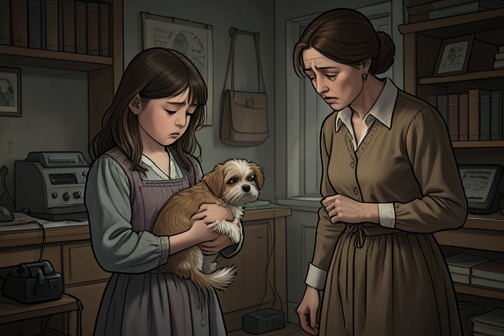
[Rhoda's pet wire-haired terrier falling to its death](entity:event-recall-event-48a0cf56d3fc) is a remembered [Baltimore](entity:location-recall-location-fffe9b5e5046) incident that becomes newly disturbing to [Christine Penmark](entity:character-recall-character-christine-penmark-739af564464e) after [Claude Daigle](entity:character-recall-character-claude-daigle-f028f68e0de2) disappears. The dog’s fall had once been treated as an accident; in retrospect, Rhoda’s detachment and the thinness of her explanation make it part of Christine’s growing suspicion about her daughter.
## The Dog and Its Care
The incident began when Rhoda wanted a puppy after seeing one owned by another child in the apartment house where the Penmarks lived. Christine and [Kenneth Penmark](entity:character-recall-character-kenneth-penmark-89cad63d6403) bought the wire-haired terrier Rhoda selected. Christine was pleased that her daughter seemed interested in something beyond herself, and Rhoda initially carried the dog around and showed it to people in the lobby, boasting of its cost and pedigree.
Kenneth regarded caring for the pet as a lesson in responsibility and kindness. But feeding and taking the dog outside began to interfere with Rhoda’s reading, jigsaw puzzles, and piano practice. The contrast between her early display of affection and her later reluctance to care for the animal gives the accident its troubling context, without establishing how the dog came to fall.
## The Fall and Rhoda’s Response
The terrier fell from a window ledge into the courtyard below. Christine heard its dying whimper and went into Rhoda’s room, where she saw her daughter leaning out of the window and looking dispassionately at something below. Three stories down, the little dog lay with its spine crushed.
When Christine asked what had happened, Rhoda walked away as though the matter did not concern her. At the door, she offered the possibility that the dog had fallen out of the window, but Christine and Kenneth never received another explanation from her. The account leaves the cause unresolved: it records Rhoda’s proximity and indifference, not proof that she caused the fall.
## Christine’s Recollection and Its Consequence
Christine remembers the incident during a conversation with [Octavia Fern](entity:character-recall-character-octavia-fern-30ce07396187) about the guard who had seen a girl in a red dress at the wharf around noon on the day Claude went missing. After hearing that sequence, Christine senses a vague connection between the two accidents. The memory does not settle what happened to either the dog or Claude; instead, it changes the weight Christine gives to an earlier episode she had not understood as evidence of anything more than misfortune.
Her unease becomes physical: her hand trembles and her teacup rattles in its saucer. She steadies herself before asking whether the Fern sisters are suggesting that Rhoda had anything to do with Claude’s death. Octavia responds that the possibility had never entered their minds, and Claudia says they would have been compelled to notify the authorities if they had suspected it. The dog’s fall thus returns not as a solved crime but as a private precedent that sharpens Christine’s fear and remains open to doubt.
Event 4
Claude Daigle’s murder
[Claude Daigle’s murder](entity:event-recall-event-claude-daigle-s-murder-03d4aea74825) emerges through [Rhoda Penmark](entity:character-recall-character-rhoda-penmark-27e34b7929e6)’s account to her mother, [Christine Penmark](entity:character-recall-character-christine-penmark-739af564464e): a demand for a school award became a fatal confrontation when Rhoda tried to prevent Claude from reporting her. The disclosure matters not only for establishing how Claude drowned, but for revealing how Rhoda explains her actions—as a response to an imagined wrong rather than as responsibility for his death.
## Causes and Background
At [Fern Grammar School](entity:location-recall-location-fern-grammar-school-a9e9f6769fec), the penmanship medal had gone to [Claude Daigle](entity:character-recall-character-claude-daigle-f028f68e0de2) rather than Rhoda, who wanted it for herself. Rhoda later told Christine that she followed Claude to the wharf after he ran there, demanded the medal, and threatened to strike him if he refused. Claude initially said no, but after Rhoda struck him once, he handed it over. The exchange might have ended with the award in Rhoda’s possession; instead, Claude said he would tell Miss [Octavia Fern](entity:character-recall-character-octavia-fern-30ce07396187) that Rhoda had taken it and that she would have to return it. Rhoda identified that threat as the reason she continued the assault.
## The Fatal Escalation
After Claude handed over the medal, he tried to get away. Rhoda told Christine that she struck him again, and then again when his cries made her fear that someone nearby would hear. Claude fell into the water. Her account made the change in the encounter clear: the first demand had been for the medal, but once Claude threatened to report her, Rhoda’s violence was also aimed at stopping him from telling. She described that threat as her reason for continuing, while repeatedly assigning responsibility to Claude.
Christine pressed her about the bruises on the backs of Claude’s hands. Rhoda said he had tried to hold on to the wharf, and that she struck his hands and head to make him let go. She linked the blood on her shoe to this final part of the struggle. The details turn the medal and shoe into evidence of the sequence she recounts: Claude had surrendered the award, but Rhoda continued attacking him to prevent him from reporting her, and he drowned after falling into the water. Even as she admitted what she had done, Rhoda maintained that Claude was at fault for threatening to tell.
## Christine’s Response and Rhoda’s Fear
Christine had first watched Rhoda’s tears with a newly detached attention, recognizing that her daughter’s show of distress was unconvincing. That impression changes when Rhoda stops trying to persuade her through tears and calmly admits striking Claude. Christine’s anger briefly breaks into a slap, but it gives way to shock and nausea as she asks whether Rhoda understands that she has killed him. Her questions then turn to the details of Claude’s injuries, showing that she is trying to establish what happened rather than accept Rhoda’s shifting explanations.
Rhoda alternates between crying, insisting that Claude was responsible, and moving close to Christine with affectionate assurances. The changes in manner sit beside the clarity of her admission: she describes her actions, yet continues to treat Claude’s threatened report as the decisive wrong. Her renewed display of tenderness does not settle Christine’s alarm. The scene instead exposes the distance between Rhoda’s concern for her mother’s approval and her refusal to accept responsibility for Claude’s death.
Rhoda’s account of [Leroy Jessup](entity:character-recall-character-leroy-jessup-fe1f5094d50e)’s warning brings a new fear into the exchange: she worries that the authorities will place her in an electric chair. She clings to Christine and asks to be protected from that possibility, while Christine paces in panic. The encounter thus ends not with remorse or a resolution, but with Rhoda seeking maternal protection from the consequences she has just described and Christine left facing both her daughter’s confession and the question of what to do next.
## The Confession’s Changing Shape
Rhoda’s account emerges through Christine’s successive questions rather than as a single, settled explanation. She first acknowledges striking Claude, then describes the sequence at the wharf, and later supplies details about his hands and the blood on her shoe. Each answer makes the account more specific, while her explanation remains fixed on the threat that Claude would tell Miss Octavia Fern. The contrast gives the confession its particular force: the facts she provides clarify what happened, but they do not lead her to revise her claim that Claude was to blame.
Event 5
Christine discovers Rhoda murdered Claude
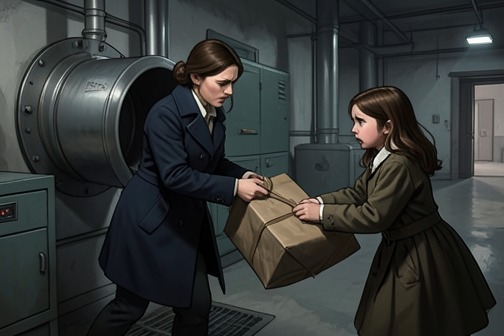
[Christine Penmark](entity:character-recall-character-christine-penmark-739af564464e)’s discovery of [Rhoda Penmark](entity:character-recall-character-rhoda-penmark-27e34b7929e6)’s concealed shoes turns a mother’s growing suspicion into knowledge: the child admits that she killed [Claude Daigle](entity:character-recall-character-claude-daigle-f028f68e0de2) after he refused to give her the penmanship medal. The scene exposes both the circumstances of Claude’s death and the gulf between Christine’s search for truth and Rhoda’s attempts to control how that truth is received.
## Discovery of the Shoes
After Rhoda asks about bloodstains, Christine notices her daughter leave her bedroom carrying a paper-wrapped parcel. Rhoda looks around to make sure no one is watching, then heads toward the [Apartment Building Incinerator](entity:object-recall-object-30727ac805a3). Christine follows, blocks the chute, and demands the package. Rhoda denies having anything in it, but when Christine takes it, Rhoda pulls away and struggles to recover it. Christine stops her a second time and opens the parcel: inside are the cleated shoes Rhoda wore to the picnic and had not worn since. The attempted disposal makes the shoes more than a suspicious object; they are the physical link Christine has been seeking between her daughter and Claude’s death.
## Rhoda’s Confession and Account
Christine connects the shoes to the marks found on Claude and presses Rhoda to tell the truth. Rhoda initially tries to evade the accusation, then admits calmly that she struck him with a shoe, presenting the act as something she had to do. When Christine asks whether Rhoda understands that she murdered the boy, Rhoda instead insists that Claude was at fault because he would not give her the penmanship medal.
Rhoda recounts that she demanded the medal from Claude at the wharf. After he refused, she struck him; he then handed over the medal, but tried to run away. Rhoda says she struck him again, and when he fell into the water, he tried to pull himself back onto the wharf. She continued striking him because he threatened to tell on her, and says she hit him until he let go and fell away from the wharf. Her account makes clear that Claude’s drowning followed not a single impulsive blow but Rhoda’s repeated efforts to obtain the medal and prevent him from reporting her.
Even while describing what happened, Rhoda repeatedly shifts responsibility to Claude, arguing that his refusal and threat made her actions necessary. Her composure gives way to fear when she asks whether authorities will put her in the electric chair, and she clings to Christine for reassurance that her mother will protect her. The exchange leaves Christine with the truth she had sought, while revealing that Rhoda’s immediate concern is not Claude’s death but the consequences she may face.
## The Secret Christine Chooses to Keep
Once Rhoda has confessed, Christine tells her to go into the park while she considers what should be done for them all. She asks her daughter to promise not to tell anyone else, but Rhoda’s contemptuous, tolerant expression makes clear that Christine has mistaken the source of the danger: Rhoda is not likely to reveal the crime carelessly. Christine then asks about the old woman in [Baltimore](entity:location-recall-location-fffe9b5e5046), and Rhoda says she shoved her a little. The admission widens Christine’s knowledge beyond Claude’s death, while Rhoda offers it with the same mild compliance that leaves her mother unable to read it as remorse.
Alone, Christine sees her reflection in the bathroom mirror, laughs, and rests her head against the glass. The gesture marks no resolution; she recognizes that she must live with the secret and hope for the best. Although she knows she will eventually have to tell Kenneth, she cannot yet bring herself to confide in him or anyone else. Instead, she telephones [Reginald Tasker](entity:character-recall-character-reginald-tasker-6f26fd9837b7) with a disguised account of her own crisis: saying she has been working on her novel, she describes a criminal child resembling the murderesses she has been reading about. The confession is therefore displaced into fiction, allowing Christine to speak indirectly while withholding from Reginald the truth about Rhoda.
## Narrative Significance
The discovery is the point at which suspicion becomes knowledge: the concealed shoes connect Rhoda Penmark to Claude Daigle’s death, and her account supplies the sequence that Christine Penmark had been trying to establish. Yet the explanation does not bring moral clarity or reconciliation. Rhoda describes the killing while continuing to assign responsibility to Claude, so that factual disclosure and acknowledgment of guilt remain sharply apart. Christine’s knowledge also changes the scene’s stakes: she is no longer weighing a frightening possibility but deciding how to live with a confirmed crime. The later turn to Reginald Tasker through the pretext of a novel extends that division between knowing and speaking, showing how the truth can be confessed indirectly while remaining concealed from those closest to the family.
Event 6
Christine Penmark discovers her identity as Bessie Denker’s daughter
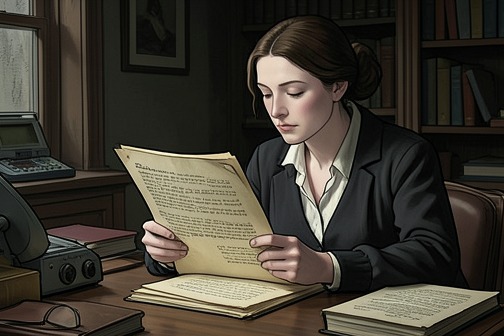
[Christine Penmark discovers her identity as Bessie Denker’s daughter](entity:event-recall-event-christine-penmark-disco-ec597e88e2bd) while reading a criminal case history that gradually turns from an account of a notorious murderer into a record of her own concealed childhood. The recognition links Christine to the one surviving child of Bessie’s family and transforms her efforts to understand Rhoda: what had seemed like a baffling resemblance now appears, to Christine, to be an inheritance passing between generations. The revelation is both personal and interpretive, but the novel leaves its biological explanation within the characters’ uncertain debate rather than establishing it as scientific fact.
## The Case Files and a Growing Recognition
Christine’s discovery develops through the files [Reginald Tasker](entity:character-recall-character-reginald-tasker-6f26fd9837b7) has lent her. She has been reading criminal histories because she is trying to make sense of Rhoda’s actions and decide what responsibility, if any, should follow from them. Her questions range from whether Rhoda is sane to whether Christine should report her to the authorities. She fears that reporting her daughter would bring institutional consequences and public exposure, while keeping silent leaves unresolved the danger Rhoda may pose to others. The case files therefore offer both a possible framework for understanding Rhoda and a source of mounting anxiety.
In one folder, Christine encounters a case titled *The Unparalleled [Bessie Denker](entity:character-recall-character-bessie-denker-11a3aea19b63)*. The name troubles her with a familiarity she cannot explain. The account identifies Bessie as Bessie Schober, born in Iowa in 1882, and relates that deaths and suspected violence had surrounded her family from her childhood. The record attributes her brother’s death to arsenic Bessie placed on his bread and butter when she was seven, mistaking it for sugar; her younger sister drowned in a well. It also recounts the later, unresolved shooting of her grandfather, who had been alone with eleven-year-old Bessie. Christine reads these details with unease, then tries to put the file aside.
The names in the history continue to return even after she decides to stop reading. Christine finds herself recalling members of the Denker family, including children whose names she believes she already knows. Her recognition seems to precede her ability to explain it. At a party, she tells Reginald that the case gives her the feeling of having encountered it before, although she cannot say why. His acknowledgment that the sensation is familiar to him does not resolve her uncertainty. Instead, the conversation sharpens her attention to the details that might connect the case to her own past.
## [Ada Gustafson](entity:character-recall-character-ada-gustafson-52f2423144ba) and the Identity Revealed
Christine interrupts Reginald’s account to ask about Ada Gustafson. He explains that Ada was a poor relation who came to live with Bessie’s family late in the sequence of events. She worked at the farm, helped with the household and children, and observed Bessie closely. Reginald describes her as the person whose observations eventually helped bring Bessie down: Bessie was tried and executed for Ada’s murder, a crime the record could establish more readily than some of the other family deaths.
As Reginald speaks, Christine recalls Ada dimly from her own childhood. She remembers that her family did not like Ada and that Ada had a dog named Spot. Christine also remembers the children’s different relationships with the dog, including that Spot never befriended Peter. These memories are not detached historical knowledge: they place Christine inside the family she has been reading about. Her questions become more direct, culminating in asking the name of Bessie’s youngest child.
Reginald answers that the child was named Christine, like her. He adds that the girl was blond like her father and that Christine’s own father, [Richard Bravo](entity:character-recall-character-richard-bravo-8a2a55eac684), had met her and written about her plight. His essay, Reginald says, had been among Richard’s finest and was still occasionally reprinted. The coincidence of the name, the physical description, Christine’s childhood memories, and her father’s connection to the case converge into recognition. Christine is the surviving youngest Denker child described in the file; the protected identity that had made the child’s later life unknowable to the case’s readers is her own.
## From Case History to Personal Past
The account Christine reads closes by saying that, when Bessie stood trial, the youngest child was the only Denker family member still alive. Its author speculates that the girl was adopted by a respectable family, that her new identity had been carefully guarded, and that her later life was unknown. The case history treats the child as an unresolved fate, inviting readers to wonder whether she remembered or understood what her mother had done. For Christine, those unanswered questions collapse into the present: she is not an observer trying to imagine the child’s future but the person whose identity the account has concealed.
Her response is immediate and disorienting. She drops the folder, lies down, and weeps as she recognizes herself in the history. The revelation does not merely add a forgotten branch to her family tree. It makes her own adoption of a new identity part of the story she has been reading, and it connects her father’s journalism to the account of her earliest life. Richard Bravo had studied Bessie’s trial and written about the child’s plight without, as far as the scene establishes, making the truth plain to Christine. The case file’s distance and speculation are overturned by the person it had rendered unknowable.
## Inheritance, Guilt, and Uncertainty
After learning who she is, Christine interprets Rhoda’s behavior through the newly revealed family history. She concludes that Rhoda is not responsible for what she has done and that Christine herself is guilty because she believes she passed Bessie’s inheritance to her daughter. This belief intensifies her existing crisis: she has already been weighing her duty to Rhoda against her duty to society, and now she experiences the danger as something transmitted through her own line. The discovery thus alters not only her account of the past but her understanding of what she owes her child and the people Rhoda may harm.
Christine seeks reassurance from Reginald by asking whether a criminal disposition could pass between generations. He reasons that such a disposition might be the result of an absence in a person from the beginning rather than a quality acquired through experience, and compares its possible transmission with other inherited conditions. Earlier, he had argued that environment might modify the outward expression of such people but could not change their underlying nature. Those claims help explain why Christine reads the Denker history as a pattern recurring in Rhoda, but they remain Reginald’s views within the novel. When Christine asks what psychiatrists think, he points out that experts have disagreed, rather than supplying a single authoritative answer.
That uncertainty matters to the event’s significance. The discovery gives Christine a compelling explanation for Rhoda’s conduct, and the resemblance between grandmother and granddaughter makes hereditary evil feel to her like a revealed fact. Yet the evidence also shows how much of that conclusion is an interpretation made under pressure: Christine is frightened, burdened by guilt, and searching for a way to understand her child. The case history changes what she knows about herself, but it does not settle the competing questions of inheritance, environment, responsibility, or what action she should take.
Event 7
Bessie Denker’s murder of the Denker family and capture
[Bessie Denker](entity:character-recall-character-bessie-denker-11a3aea19b63)’s murder of members of the Denker family and her capture mark the collapse of a scheme she had built around inheritance, concealment, and control. When questions about the deaths of [August Denker](entity:character-recall-character-august-denker-be39aaa9acf7) and Grandfather Denker threaten to expose her, Bessie tries to redirect suspicion toward [Ada Gustafson](entity:character-recall-character-ada-gustafson-52f2423144ba). She then kills Ada and the other children, attempts to disguise the crime and escape, and is caught the next morning at [Kansas City Union Station](entity:location-recall-location-b8ef7dfe26fa). The event is also a buried part of [Christine Penmark](entity:character-recall-character-christine-penmark-739af564464e)’s childhood: Christine’s later recollection supplies a crucial correction to the explanations others had offered for why she alone was spared.
## Inheritance and Suspicion
Bessie’s earlier crimes grew from a plan to obtain the Denker money. After marrying August, she waited until he acquired the property she had won for him. His changed behavior and impractical plans to increase the estate threatened the fortune she considered the result of her life’s work. Bessie then gave him arsenic in buttermilk. The account presents the killing as a break from her usual cautious strategy, prompted by the danger she believed his decisions posed to the estate. She settled into the role of a bereaved widow, apparently regarding her actions as clever business rather than crimes deserving remorse.
Suspicion did not begin with an official investigation. Ada Gustafson, a quiet and mistrusted relative, began telling neighbors that August had not died of the illness they had been told about. She also questioned the earlier death of Grandfather Denker, whom she remembered as vigorous, and connected both deaths to Bessie’s interest in the people who had died. At first, neighbors treated Ada’s claims with amusement and disbelief. Ada nevertheless took them to the sheriff and demanded that August’s body be examined.
The county sought permission to exhume August. When Bessie objected, officials obtained a court order and proceeded. The investigation transformed Bessie’s position: the confident widow faced the possibility that an examination would expose the poisoning. The account emphasizes that panic displaced the ordinary good sense that had helped her protect herself. Rather than remain silent or maintain her earlier composure, she made a desperate attempt to construct a new accusation.
## The Attempt to Shift Blame
Bessie acknowledged that August and Grandfather Denker had been poisoned, but claimed that Ada was responsible. She portrayed Ada as a threat to herself and her children, alleging that Ada had made repeated threats and that Bessie had kept quiet out of fear. She also instructed others to remember her accusation and act as witnesses if anything happened to her or the children. The story she devised was intended to make Ada look like the source of danger before the investigation could turn decisively toward Bessie.
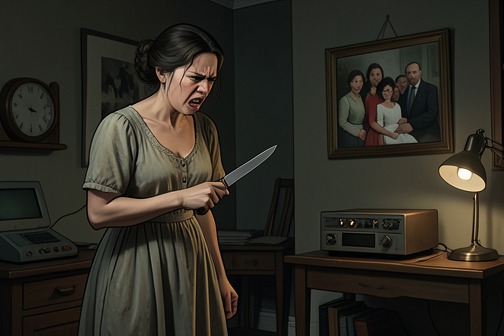
That same night, Bessie killed Ada and all the children except the youngest, Christine. She tried to make the scene support her account: she dressed Ada in her own clothes and put her wedding ring on Ada’s finger, while she herself wore a suit belonging to her husband. She then set fire to the farmhouse and left, hoping the authorities would identify Ada as the killer and believe that Bessie had died there. The attempted substitution made the house and the identities of the women part of a single escape plan: if the investigators accepted the disguise, Bessie might evade responsibility as well as capture.
The plan failed. Bessie took a newspaper-wrapped parcel with her and was caught the following morning in the waiting room at Kansas City Union Station. The parcel’s contents disclosed that the woman in the farmhouse had not been Bessie, as she had hoped the authorities would assume. Her disguise and the staged fire had not provided an escape; instead, the effort to make Ada bear the blame became part of the circumstances of Bessie’s arrest.
## Christine’s Survival and Recollection
The reason Christine was spared remained uncertain in the accounts surrounding the case. One story held that Ada had favored Christine and sent her to a neighboring farmhouse for the night, but the account explicitly notes that this explanation had no factual support. [Richard Bravo](entity:character-recall-character-richard-bravo-8a2a55eac684) thought Bessie may have considered Christine too young to understand what had happened or to testify against her. Another interpretation was that Bessie expected to outwit her pursuers and preserved Christine as a resource for a future life elsewhere. These were explanations proposed by others, not established motives.
Christine supplies a different and personal account. After closing her eyes, she rejects the versions she has heard and remembers that she was awake when Bessie attacked Sonny. Christine says she ran out and hid in weeds behind the barn. Bessie called for her and promised not to hurt her if she came out, but Christine had seen enough through a window to know what had happened to the others. She did not answer. In this recollection, Christine’s survival does not depend on an unverified act of rescue or on Bessie’s plan for the future: she remained hidden and refused to trust her mother’s call.
## Narrative and Consequences
The event reaches Christine through old accounts before it becomes an openly stated memory. Those accounts reconstruct Bessie’s motives, the investigation, and the attempted escape, but leave the youngest child’s survival unresolved. Christine’s correction changes the emphasis: the question is no longer only what Bessie intended, but what Christine witnessed and how she escaped notice. The contrast between Bessie’s calculated disguises and Christine’s hiding place makes concealment central to the episode, while also showing that concealment did not mean ignorance. Christine had seen what her mother had done and chose silence in order to survive.
The case also gives shape to the larger moral problem Christine faces as a mother. She considers whether a child who has committed grave acts should be treated as insane, confined to prevent further harm, or reported to the authorities; she worries about what such a decision would mean for the child and for society. Her thoughts about Bessie’s crimes therefore do more than recover family history. They place Christine’s present dilemma beside an earlier pattern of violence and concealment, while her own childhood memory reveals how little the public explanations can settle about a survivor’s experience.
Event 8
Bessie Denker’s execution

[Bessie Denker’s execution](entity:event-recall-event-bessie-denker-s-executi-41519073ad08) closes the account of her criminal life while opening a new horizon of fear for [Christine Penmark](entity:character-recall-character-christine-penmark-739af564464e): confronted with the public record of her mother’s death, Christine imagines [Rhoda Penmark](entity:character-recall-character-rhoda-penmark-27e34b7929e6) following the same path. The execution matters both as the outcome of a trial and as the image through which Christine recognizes a possible future for her daughter.
## Trial and Execution
[Bessie Denker](entity:character-recall-character-bessie-denker-11a3aea19b63) was tried and eventually executed for the murder of [Ada Gustafson](entity:character-recall-character-ada-gustafson-52f2423144ba). The account distinguishes that conviction from the murders of members of the Denker family: those crimes, [Reginald Tasker](entity:character-recall-character-reginald-tasker-6f26fd9837b7) explains, would have been more difficult to prove. Ada, an older poor relation who had lived and worked at the farm, had observed Bessie closely and became the obstacle that ultimately brought about her defeat. The trial’s outcome therefore rested on the murder that could be established in court, not necessarily the crime that might seem most central to the family’s destruction.
## The Public Record
The execution became a widespread sensation. The next morning, although Christine had decided she had little left to learn about her mother, she returned to the library to read newspapers from the period. One report described a photographer who had smuggled a camera into the execution and concealed it behind a button; the resulting photograph captured Bessie at the moment the current struck. The press coverage turned the execution into a public image as well as a legal conclusion, and Christine studied that image at length.
## Christine’s Recognition
For Christine, the photograph changes the meaning of her research. She concludes that, unless something is done, Rhoda may repeat her grandmother’s pattern: evade detection for a time, destroy what she encounters, and eventually be caught and executed. Christine imagines several possible forms of execution, but the essential recognition is that Rhoda’s apparent cleverness would only delay the outcome she associates with Bessie. The possibility that had once seemed uncertain now appears to Christine as a repetition across generations.
After studying the photograph, Christine stops reading and returns the old newspapers to their custodian. The record has given her no comfort or practical resolution; instead, it has made her fear for Rhoda’s future concrete. The execution thus functions in the novel as more than the end of Bessie’s life: through Christine’s response to its documentation, it becomes a warning about the destructive pattern she believes may continue in her daughter.
Event 9
Leroy Jessup’s murder

[Leroy Jessup’s murder](entity:event-recall-event-leroy-jessup-s-murder-60534e355e15) is the moment [Rhoda Penmark](entity:character-recall-character-rhoda-penmark-27e34b7929e6) turns a threat of exposure into another killing, while her mother, [Christine Penmark](entity:character-recall-character-christine-penmark-739af564464e), watches and fails to intervene in time. Its immediate trigger is Leroy’s claim that he has recovered the shoes connected to [Claude Daigle](entity:character-recall-character-claude-daigle-f028f68e0de2)’s death. What begins as a contest of taunts becomes a calculated fire: Rhoda sets alight Leroy’s makeshift basement bed, keeps the door secured, and remains nearby as the situation becomes fatal.
## The Shoes and the Threat
Leroy first claims that he entered [Christine Penmark’s apartment](entity:location-recall-location-christine-penmark-s-a186152437c9) with a key and took Rhoda’s shoes, which he says he has hidden. He threatens to give them to the police and point out the blood he believes they bear. Rhoda dismisses him, insisting that she burned the shoes in the [Apartment Building Incinerator](entity:object-recall-object-30727ac805a3). But Leroy says he found them after hearing something fall down the chute: they had landed on top of the coals, scorched but not destroyed. In his account, enough remains to reveal the blood and implicate Rhoda in Claude Daigle’s death.
The recovered shoes change the balance between them. Rhoda had believed the evidence destroyed; Leroy now claims both possession of the shoes and the ability to expose her. He presents the threat as leverage, demanding that she obey him and treat him well. Rhoda’s response is no longer dismissive. She stands still, then calmly asks him to give the shoes back. Her insistence makes clear that she believes his account, even as Leroy refuses to surrender what he says he holds over her.
## From Taunting to Fear
Leroy initially treats the exchange as a game. He laughs at Rhoda’s disbelief and enjoys the power he thinks the shoes give him. As she follows him through the courtyard and repeatedly demands their return, however, his teasing loses its ease. He first says he was only joking, then admits that he believes she really did kill Claude with her shoe. Rhoda continues after him, and Leroy becomes unsettled enough to withdraw from the confrontation.
Away from her, Leroy recognizes that he is afraid of the child. He had imagined telling his wife, [Thelma Jessup](entity:character-recall-character-thelma-jessup-047949ceaab7), about finding the shoes, but now decides not to tell her or anyone else. The next day he comes to work intending to avoid Rhoda. Although she does not enter the park that morning, he sees her watching him from her window; when their eyes meet, he registers her anger. His attempt to avoid her does not end the danger. The shoes remain the point of contact between them, and Rhoda continues to pursue their return.
## The Fire in the Basement
While Leroy is in the basement room for his customary nap, Rhoda asks Christine for money to buy an ice-cream stick. In the kitchen, Christine sees her take three large matches, pause, and return one. Rhoda then buys the treat and sits near the basement, eating it while listening to Leroy sleep. From the kitchen window, Christine watches her daughter approach the basement door, check that no one is looking, light a match, and go inside. Rhoda applies the flame to the excelsior and papers piled as Leroy’s makeshift bed, then slips out and closes the door. She also shifts the flimsy bolt that holds the door shut when the wind blows.
Christine sees what Rhoda has done, but cannot immediately accept the act as real. Smoke begins to come through the barred windows, and Leroy calls from inside, asking Rhoda to unlock the door. She shakes her head. As the fire spreads, he tries to escape and insists that he does not have the shoes and was only teasing her. Rhoda answers that he knows where they are. Even when Leroy gets out of the basement, she does not help him; she continues eating, then disposes of the stick and its wrapper in the garbage can under the stairs.
## Death and Consequences
Leroy runs across the courtyard toward the gate, but does not get out. He loses his hold there, sinks to the cement, and dies. Rhoda stands by, smiling and nodding as though the scene were a diversion she had arranged. Her calm conduct contrasts with the urgency of the fire and confirms that this is not an accident or a failed attempt to frighten Leroy, but a deliberate killing.
Christine turns away from the window and tries to keep calm, telling herself that the situation is an emergency. She intends to lie down, but collapses before reaching her bed and loses consciousness. When she comes to, she is going down the back stairs, calling Rhoda’s name. Her reaction makes the murder a crisis for both mother and daughter: Christine has witnessed Rhoda’s action, while Rhoda has once again answered the danger of exposure with violence. The recovered shoes provoke the confrontation, but Leroy’s death leaves him unable to report what he knows and leaves Christine facing what she has seen.
Event 10
Christine’s attempted killing of Rhoda
[Christine Penmark](entity:character-recall-character-christine-penmark-739af564464e)’s attempted killing of [Rhoda Penmark](entity:character-recall-character-rhoda-penmark-27e34b7929e6) is the culmination of Christine’s fear that her daughter will repeat [Bessie Denker](entity:character-recall-character-bessie-denker-11a3aea19b63)’s crimes and of her belief that she herself passed that inheritance on. Rather than expose Rhoda to public discovery and punishment, Christine plans to make the child die without knowing what is happening, then takes her own life. The episode joins a private act of maternal protection to a fatal certainty about heredity, while leaving Rhoda’s immediate fate unresolved in the supplied account.
## Discovery and the logic of inheritance
Christine’s plan follows her discovery that she is Bessie Denker’s daughter. Her reading about Bessie has supplied a grim family history: Bessie’s younger brother died after, at seven, she mistakenly put arsenic on his bread and butter believing it was sugar; her younger sister drowned after falling into a well; and neighbors later recalled that Bessie’s grandfather had been shot while she was alone with him at eleven. The account does not establish Bessie’s responsibility for every death, but it presents the suspicion and uncertainty surrounding her childhood as part of the pattern Christine is trying to interpret.
Earlier, Christine had asked [Reginald Tasker](entity:character-recall-character-reginald-tasker-6f26fd9837b7) how a criminal disposition might arise. Tasker proposed that persistent criminality could stem from an inborn lack rather than something acquired, and that benign surroundings might fail to change it. His explanation is a character’s theory, not independent proof of heredity. Once Christine learns of her parentage, however, she turns that theory against herself: she regards Rhoda as not responsible for what she has done and herself as guilty for transmitting Bessie’s inheritance. Her repeated shame does not relieve her of the burden; it makes her feel that she has no right to blame her daughter.
Christine’s reading of the account of Bessie’s electrocution sharpens this fear into a forecast. Seeing how Bessie’s life ended, she imagines Rhoda escaping detection for a time, harming others, and eventually being caught and publicly executed. This is Christine’s fearful projection, not an established future for Rhoda. But it changes the decision before her: she comes to see death as a way to prevent both further harm and the public exposure she associates with Bessie’s end.
## From a proposed ending to a private decision
Miss Glass tells Christine that a literary group has discussed possible endings for Christine’s book. The group considered psychiatric treatment, reform school, and trust in the future, but voted unanimously for an ending in which the mother keeps the secret, kills the child, and then commits suicide. Christine says this possibility had occurred to her too. The conversation does not itself make the decision for her; it places her private dilemma beside a fictional problem of how to end a story, making the planned action seem at once imaginable and disturbingly complete.
That night Christine writes and signs a holograph will dated August 3, 1952. She leaves her jewelry and a 1912 Utrillo landscape to [Monica Breedlove](entity:character-recall-character-monica-breedlove-b326f340ce2b), returns a Modigliani drawing to [Kenneth Penmark](entity:character-recall-character-kenneth-penmark-89cad63d6403) with a request for forgiveness and the hope that he will marry again, and leaves her remaining property to [Thelma Jessup](entity:character-recall-character-thelma-jessup-047949ceaab7), identified as the widow of [Leroy Jessup](entity:character-recall-character-leroy-jessup-fe1f5094d50e). She locks the will in her desk and understands it as the only atonement still available to her. The bequests make the plan concrete: even as she prepares to die, she assigns what she owns to people connected to her life and tries to address the husband she will leave behind.
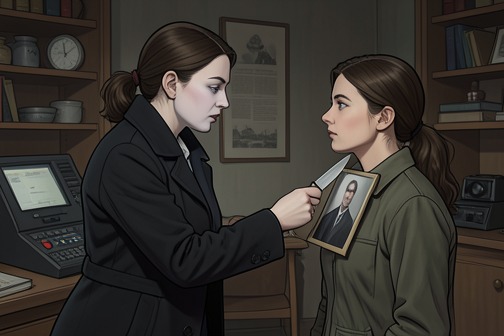
Christine then approaches the plan as a sequence of practical steps. She wants Rhoda neither to suffer nor to know what is coming. She believes she cannot use physical violence against her daughter, and settles on [Sleeping Pills](entity:object-recall-object-c85f723193e4) prescribed for Christine’s own discomfort by Monica Breedlove and a doctor, but never taken. Christine anticipates that Rhoda may recognize danger, so she rejects several possible methods of persuading her to take the pills without suspicion. Her efforts to conceal her purpose are part of the event’s central contradiction: she treats a lethal act as something that must be made to appear ordinary and reassuring.
## The tablets and the final night
To give the plan a plausible pretext, Christine takes Rhoda to a doctor, saying that the child has been listless and pale and has a poor appetite. The doctor finds Rhoda healthy. On the way home, Christine tells her that the doctor recommends vitamin tablets, then buys them in Rhoda’s presence. Later, she removes the tablets from their container and substitutes Sleeping Pills. The doctor’s examination and the visible purchase are not incidental details: Christine uses them to build a credible explanation for the tablets and to keep Rhoda from questioning why her mother is offering them.
At bedtime, Christine presents the pills as the recommended vitamins and measures out several at once. Rhoda questions the number and asks to see the bottle. Christine gives it to her. Rhoda examines the label and checks that the tablets in Christine’s hand look like those in the container before agreeing to take one. Her inspection briefly exposes the fragility of Christine’s deception: Rhoda does not simply accept the explanation but tests it against the object in front of her. Once satisfied, she takes the tablets one by one, swallowing each with water, while Christine urges her to finish them.
After Rhoda has taken the last tablet, Christine offers to read to her. Rhoda is midway through The Five Little Peppers and How They Grew, and Christine finds the place and reads softly until the child’s eyes close. The familiar bedtime activity lets Christine remain beside her daughter in the manner of an ordinary night, even as she waits for the pills to take effect. Looking at Rhoda asleep, Christine wavers: the child appears innocent, and Christine momentarily doubts the reality of the crimes she attributes to her. She then firmly reaffirms her belief that they happened. The scene makes clear that the act rests not on certainty about Rhoda’s future but on Christine’s conviction that the danger and inherited pattern are real.
## Suicide and the unresolved outcome
Before killing herself, Christine looks at Kenneth’s photograph and tells him that Rhoda will not destroy him or meet a public end like Bessie’s. She hopes that he would eventually forgive her, though she does not contact him to explain her decision. The photograph brings their shared life into the room at the moment Christine is about to sever her daughter from its future; her appeal to Kenneth remains private and unanswered in this scene.
Christine kisses Rhoda on the brow, takes Christine’s Pistol from her desk, and shoots herself. The account confirms Christine’s suicide but does not show Rhoda waking, being rescued, or dying, so the outcome of the attempted killing remains unstated here. Almost immediately, Monica Breedlove expresses concern that Christine has not answered her calls. The shift from Christine’s carefully managed solitude to another person’s alarm marks the beginning of a possible discovery, without yet supplying its result.
The event’s force lies in the difference between intention and knowledge. Christine intends to prevent Rhoda’s future crimes and public destruction, but the evidence presents that future as her prediction, formed through family history and a theory of inherited criminality. Her final actions therefore do not resolve the conflict between maternal protection and responsibility for harm: they enact Christine’s attempt to control an outcome she fears, while leaving the child’s fate—and the consequences of that attempt—open.
Event 11
Christine Penmark’s suicide
[Christine Penmark’s suicide](entity:event-recall-event-christine-penmark-s-sui-dc53a7a2e27c) is the decisive death of the novel’s final sequence: after forcing herself to accept that Rhoda’s deeds are real, Christine takes her own life rather than allow the child to destroy Kenneth or suffer a public fate like her mother’s. The act is deliberate, yet its motive remains unspoken to the people who survive her. The aftermath turns that silence into the event’s lasting burden: Rhoda is rescued, but Kenneth and Monica cannot establish why Christine acted.
## The final decision
Christine’s last scene begins beside Rhoda. She watches the child’s calm breathing and sees how innocent she looks, briefly doubting whether the dark instincts and deeds she has attributed to her daughter are real. She then rejects that doubt: “I’m imagining nothing. It is all true.” The movement from momentary denial to stern recognition makes her suicide follow an acknowledged reality, rather than a belief she has simply failed to question.
She next turns to Kenneth’s photograph, where love and longing bring back their shared past. Speaking to him, she says Rhoda will not destroy him as she has destroyed Christine, and that Rhoda will not die publicly as Christine’s mother did, with millions reading of her final words, thoughts, and gestures of pain over their morning coffee. Christine’s words connect her decision to two feared consequences: the damage she believes Rhoda may do to Kenneth, and the public exposure of a death like her mother’s. She touches the photograph, turns away in regret, and says softly that Kenneth would forgive her in time if he knew. The farewell expresses both her attachment to him and her expectation that he will not understand her choice at once.
## The act and its immediate aftermath
Christine kisses Rhoda once on the brow, unlocks her desk drawer, and takes out the pistol. She inspects it idly, as though its purpose has escaped her, before standing in front of the bedroom mirror and shooting herself in the head. The sequence places tenderness immediately beside lethal action: the kiss is her final contact with her daughter, and the pistol, retrieved from a locked drawer, makes the death a conscious act rather than an accident. The mirror is the setting for the final gesture, but the narration does not explain what Christine sees or thinks there.
The discovery comes through the unanswered door. [Monica Breedlove](entity:character-recall-character-monica-breedlove-b326f340ce2b) has already expressed worry after repeatedly trying to telephone Christine. [Mrs. Forsythe](entity:character-recall-character-mrs-forsythe-9ea9f3cbc063) reports that she rang the bell, pounded on the door, and called Christine’s name without receiving a response. Monica then leaves the card table to find out what is wrong, and [Emory Breedlove](entity:character-recall-character-emory-breedlove-39da47ab73e8) accompanies her rather than let her drive into town alone so late. The repeated attempts to reach Christine establish the immediate alarm, but the visitors do not know what has happened inside.
Inside the apartment, the group goes first to Christine’s bedroom, where a light is still burning, and then backs away and turns on lights throughout the apartment. Mrs. Forsythe finds Rhoda alive in the child’s bedroom and recognizes that help must come quickly. She orders Johnnie Kunkel to take Rhoda to the hospital at speed, saying she thinks there is still time to save her, and then decides to accompany them. Christine’s death and Rhoda’s endangered survival are thus discovered together, but the account gives no further detail here about what placed Rhoda in danger. Mrs. Forsythe’s urgency shifts the scene from discovery to rescue before the adults can understand the full situation.
## An unexplained death
After Christine’s funeral, Kenneth asks Monica why his wife did it and whether she had said anything that might explain her decision. Monica answers that she does not know. She has retraced Christine’s actions and spoken with [Reginald Tasker](entity:character-recall-character-reginald-tasker-6f26fd9837b7) and [Octavia Fern](entity:character-recall-character-octavia-fern-30ce07396187); neither of them has an explanation either. Kenneth insists that Christine did not act without a reason, but certainty that a reason existed does not supply its contents. The gap between his conviction and Monica’s inability to identify the cause keeps Christine’s final choice from becoming a fully explained confession.
Kenneth also asks whether Christine was insane. Monica emphatically denies it, and Emory says Christine was worried sick. Their responses offer different descriptions of her state, not a definitive account of what drove her to suicide. Monica recalls that when she was with Christine at the hotel, she urged her to cable Kenneth to come home. Christine refused and said the matter did not concern him. Monica had thought Christine seemed better in the last few days and blames herself for leaving her alone. Her recollection supplies a concrete instance of Christine withholding something from Kenneth and of Monica misreading her apparent improvement, but it does not identify precisely what Christine had discovered or why she chose death.
## Survival and narrative consequence
Rhoda is out of the hospital by the time of the post-funeral conversation and is staying with Mrs. Forsythe while arrangements for her future are considered. Mrs. Forsythe has offered to keep her for the emergency or indefinitely if Kenneth agrees; Kenneth expects Rhoda may instead go with his mother and sisters, who are due the next day. The practical question of who will care for Rhoda follows directly from Christine’s absence, while the competing possibilities leave her immediate future unsettled.
When Mrs. Forsythe brings Rhoda into the room, the girl goes straight to Kenneth and embraces him. She then pulls away, dances across the carpet, and offers him “a basket of kisses.” The charming gesture recalls the innocent appearance that troubled Christine in her final moments, but the scene does not disclose Rhoda’s understanding of her mother’s death. It closes the event’s immediate aftermath on a sharp contrast: Kenneth is pressing his hands to his head and asking why Christine died, while Rhoda returns to a playful performance of affection. Christine’s suicide answers her own fear through an irreversible act, but leaves the people around her with the question she chose not to answer aloud.
Event 12
Rhoda Penmark's emergency rescue
[Rhoda Penmark](entity:character-recall-character-rhoda-penmark-27e34b7929e6)’s emergency rescue turns a worried late-night visit to [Christine Penmark’s apartment](entity:location-recall-location-christine-penmark-s-a186152437c9) into a race to save a child. [Monica Breedlove](entity:character-recall-character-monica-breedlove-b326f340ce2b)’s decision to investigate, the improvised entry through the kitchen, and [Mrs. Forsythe](entity:character-recall-character-mrs-forsythe-9ea9f3cbc063)’s urgent response lead to Rhoda being taken to hospital alive. The rescue is followed by Rhoda’s recovery from the immediate crisis, while Christine’s death leaves those around her searching for an explanation.
## Alarm and Decision
At first Monica Breedlove is occupied with a card game, but she gives it up and says she is going to find out what is wrong at Christine Penmark’s apartment. Her concern is the immediate cause of the visit: she does not know what has happened, but cannot remain at the table while worried. [Emory Breedlove](entity:character-recall-character-emory-breedlove-39da47ab73e8) objects to her driving into town alone at that hour and agrees to accompany her. Their departure makes the concern a shared action rather than a private apprehension.
The journey brings them to the apartment house late at night. Johnnie Kunkel is pulling up across the street after taking his date home; he has to be home by midnight. Monica calls him over, and he joins her and Emory on the walk. Their arrival is not the result of an arranged emergency response. It begins with Monica’s decision to check on her friend and develops into a rescue through the people they encounter on the way.
## Entry into the Apartment
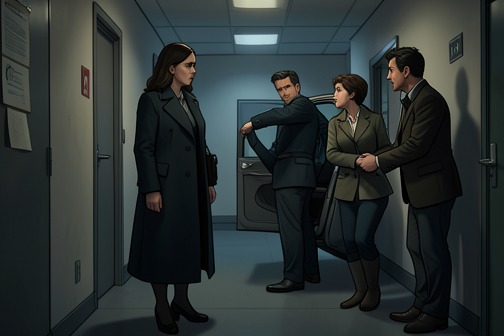
Monica first knocks and rings the front doorbell. Mrs. Forsythe comes out to them clutching her kimono to her throat, a detail that places the call in the intimacy and haste of the night rather than in an orderly daytime visit. When the front door does not provide entry, Monica asks Johnnie to climb to the back balcony, get into the kitchen, break a window if it is locked, and go through the apartment to unlock the door for them.
The plan depends on an improvised route into the home: Johnnie is sent around the building while the others wait outside. Once he opens the door, Monica calls for Christine and asks whether everything is all right. The question is a direct appeal to her friend, but no answer resolves the danger. Instead, the group begins searching the apartment. They go first to Christine’s bedroom, where a light is still burning, and huddle together at the doorway. Then they back away and turn on lights throughout the apartment. The movement from a lit but unanswered bedroom to a search of the whole home prolongs uncertainty without identifying what has happened to Christine.
## Rhoda Found and Taken for Help
Mrs. Forsythe runs to the child’s bedroom. When the others join her, she reports that Rhoda is still alive and insists that they must get help quickly. Her words establish the immediate stakes: Rhoda has been found in a life-threatening condition, but there is still time to act. The group’s alarm becomes a practical emergency, with no further attempt to establish the full circumstances before securing medical help.
Mrs. Forsythe directs Johnnie to pick Rhoda up, take her to the hospital in his car, and drive as quickly as he can. She believes there is time to save the child, but emphasizes that they must hurry. Then she changes the plan to include herself, telling Johnnie to wait because she will come with him. Her actions combine decisive instruction with personal care: she assigns the transport to the available driver and accompanies Rhoda rather than leaving her to face the journey alone. The rescue’s decisive turn is the discovery that Rhoda remains alive; the response is immediate transport, not an explanation of how she came to be in danger.
## Aftermath and Significance
The hospital journey succeeds in preserving Rhoda’s life. After Christine’s funeral, [Kenneth Penmark](entity:character-recall-character-kenneth-penmark-89cad63d6403) tells Monica that Rhoda is out of the hospital and staying with Mrs. Forsythe until arrangements can be made for her future. Mrs. Forsythe has offered to keep the girl for the duration of the emergency or forever, if Kenneth agrees. The rescue therefore extends beyond the night itself: once Rhoda is discharged, her care remains unsettled, and the adults must decide where she will live. Kenneth says his mother and sisters are expected the next day and that Rhoda will probably go back with them.
The funeral setting makes the rescue inseparable from Christine’s death, even though the searchers’ immediate attention is fixed on Rhoda. Kenneth asks Monica why Christine did it and whether she had said anything that might explain her action. Monica has no answer, despite retracing Christine’s actions and speaking with [Reginald Tasker](entity:character-recall-character-reginald-tasker-6f26fd9837b7) and [Octavia Fern](entity:character-recall-character-octavia-fern-30ce07396187); neither can explain it either. The scene thus closes the practical emergency without resolving the larger one. Rhoda is alive and recovering, but Christine’s death has left her loved ones with a question they cannot answer.